

In the 1950s, Enzo Ferrari famously declared, "I don’t sell cars. I sell engines. The cars I throw in for free, since something has to hold the engine." This philosophy defined Ferrari’s obsession with performance and engineering, a legacy that transformed the prancing horse into a symbol of automotive perfection.
History
We cannot begin without briefly looking at Ferrari's history. The story of Ferrari began with Enzo Ferrari, a boy born in Modena on February 18, 1898. At just ten years old, he was captivated by motorsport after witnessing Felice Nazzaro win the Circuit di Bologna. This moment started his lifelong passion for racing.
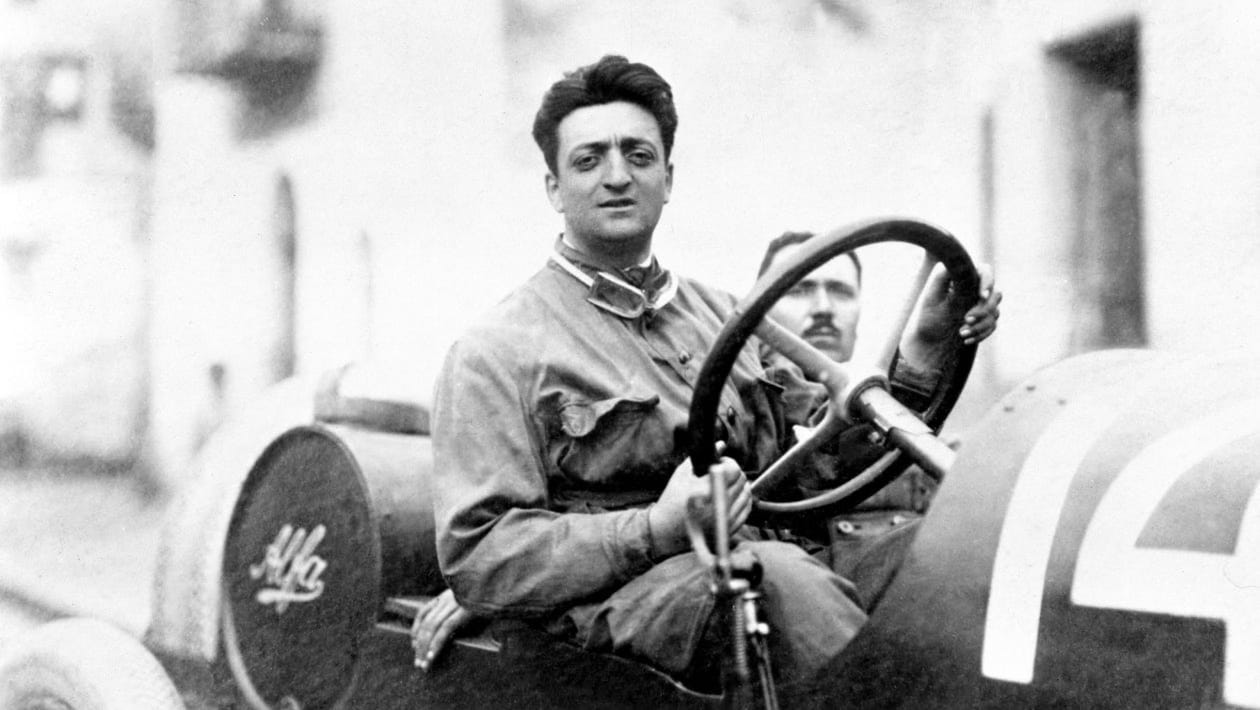
After enduring difficult times, including service in World War I, the loss of his father and brother to the Italian flu, Enzo started his career as a test driver for CMN (Costruzioni Meccaniche Nazionali). Although Fiat initially rejected him, he didn’t give up and made a name for himself in racing. His performance in the challenging Targa Florio race earned him a job at Alfa Romeo, where he became a pivotal figure in motorsport during the 1920s. In 1929, he founded the legendary Scuderia Ferrari racing team (up to this date its the racing division of Ferrari), leading Alfa Romeo to numerous victories.
In 1939, Enzo left Alfa Romeo and founded Auto Avio Costruzioni, focusing on producing racing parts. During World War II, the factory moved to Maranello, where, in 1947, Ferrari unveiled its first car bearing the now-famous logo. The brand quickly gained recognition, securing its first victory in 1948 and a major triumph at the 24 Hours of Le Mans in 1949.
The 1950s saw Ferrari introduce its first consumer vehicle, the 250 GT, while continuing its dominance in racing. Enzo’s authoritarian leadership style (he was compared to Saturn, the god who consumed his own sons) and intense intra-team rivalries resulted in both innovation and tragedy, with seven drivers losing their lives between 1955 and 1971. Despite these challenges, Ferrari thrived, bolstered by Fiat’s 1969 investment (they acquired a 50% stake in Ferrari), which funded iconic models like the 308 GTB and the Daytona 365
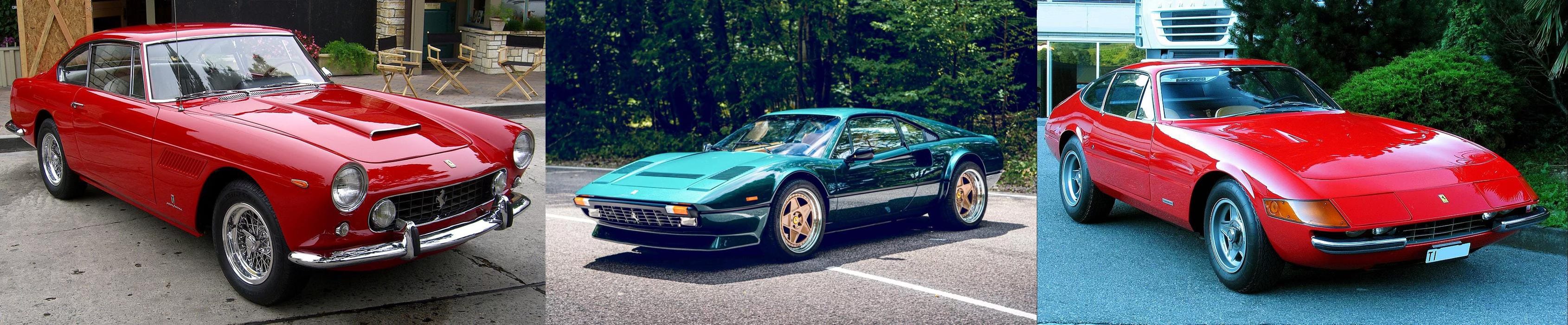
In 1984, Ferrari launched the iconic Testarossa, a car that became a cultural phenomenon, thanks in part to its prominent feature in "Miami Vice." This model marked a significant breakthrough for Ferrari, making it the best selling car till the F40, which was launched in 1988 shortly before Enzo’s passing. It was the first road car to surpass the 200 mph mark. This supercar symbolized Enzo's vision of speed and performance. In the following decades, Ferrari continued to innovate in the 90s with models like the Enzo, F50, and F430,
In 2015, Ferrari became a publicly traded company, cementing its status as a global luxury brand. Today, Ferrari blends tradition and innovation, embracing hybrid and electric vehicles.
Business Overview
Ferrari's business model is characterized by its focus on exclusivity and brand prestige, setting it apart from mass-market automotive manufacturers (which is a great thing). By limiting production volumes and maintaining high price points, Ferrari cultivates a sense of scarcity and luxury appeal. This strategy not only sustains high profit margins but also reinforces the brand's elite status in the automotive industry. However, this approach necessitates a careful balance. For example, if Ferrari were to overproduce or misstep in its brand positioning, it could weaken its exclusivity (not something I'm worried about, though). In general, expectations must be met - or in Ferrari's case, exceeded - they don’t hold a monopoly in any form, customers always have alternatives - even within the exclusive sector Ferrari operates in.
Now, let’s look at how Ferrari makes its profits before diving deeper into its strategy!
How Does Ferrari Generate Revenue?
Today, Ferrari generates revenue primarily through Cars and spare parts, Sponsorship, commercial and brand and Other. The graphic below illustrates the different pillars:
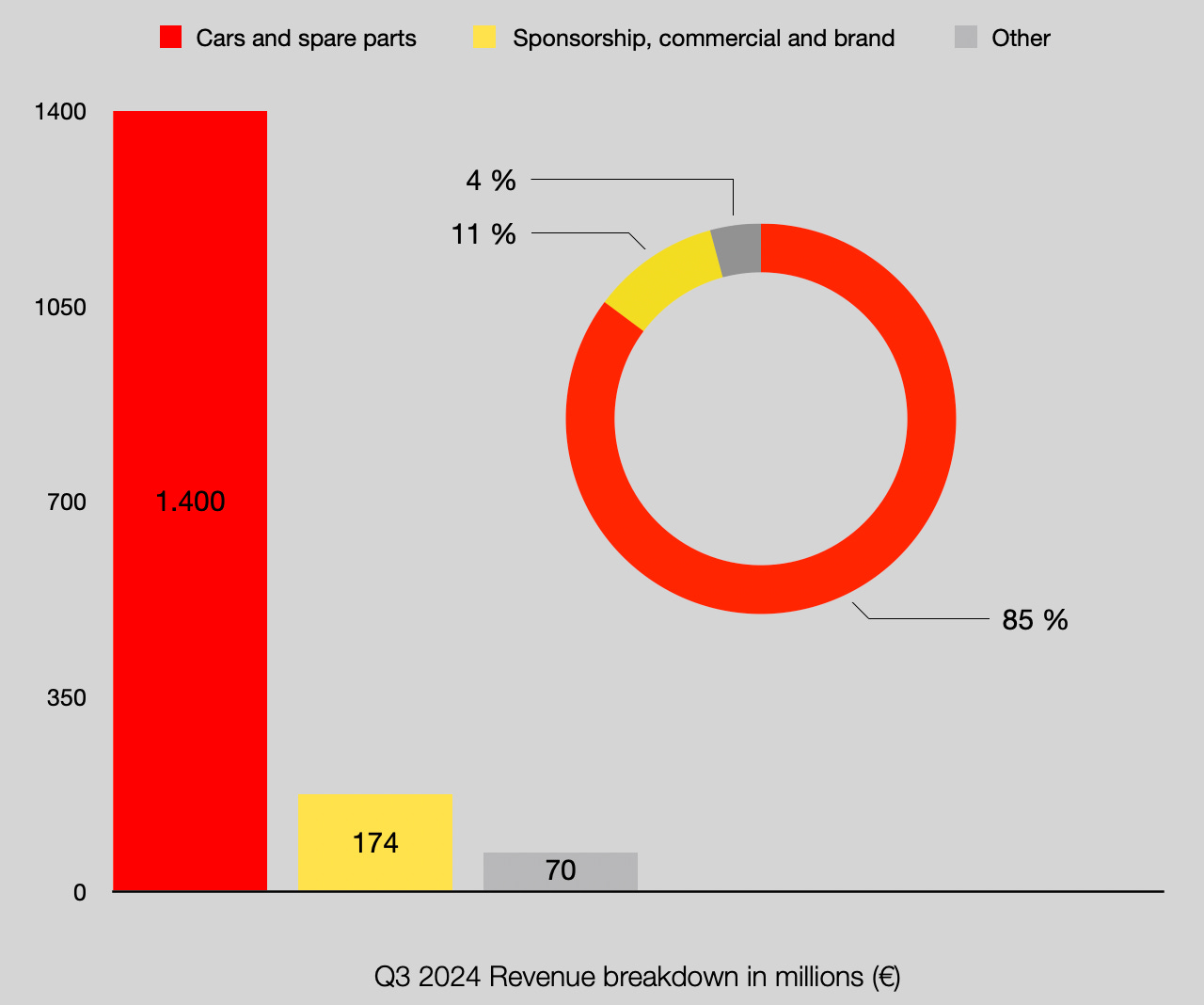
The biggest pillar comes from cars and spare parts, accounting for over 85%! This is a significant share, but not surprising. Cars and spare parts not only include the sale of new cars - in the last quarter, personalization (specific customer requests, an area where Ferrari offers a lot) accounted for approximately 20% of the total revenue.
Sponsorship, commercial, and brand includes earnings from their racing teams (for example, in Formula 1) through sponsorship agreements. Ferrari also generates revenue through its brand, including fashion collections, merchandising, licensing, and royalty income.
The other category for Ferrari includes revenues from the Mugello racetrack, sports activities, and engine rentals to Formula 1 teams.
Challenges
Before we dive deeper into Ferrari's actual product offering, we need to take at least a glance at the industry they operate in. We’ll go into more detail later.
The automotive market is highly challenging and ever-changing. Ferrari holds a position in the luxury and high-end segment - a status that is not easy to achieve. Unlike other car brands that rely on producing a high number of units and target the average consumer, Ferrari only wants a small slice of the cake, nothing more.
A shift to alternative energy sources (electric or otherwise), endless price competition over who can sell the cheapest car, or the sheer oversupply from both established and emerging car brands makes this industry incredibly tough.
Let’s go back to what I said before - why is it so difficult to secure a place in the Luxury Performance Car Industry? Certain criteria must be met: customers expect top-tier performance, exceptional design and craftsmanship, and a sense of exclusivity. The price? Secondary. Well, if you fit that criteria, success is not guaranteed, Ferrari itself explains: “Unlike in other segments of the broader luxury market, in the Luxury Performance Car Industry, a significant portion of demand is driven by new product launches.” This implies that continuous product launches are necessary. However, Ferrari is not immune to the industry's shift toward carbon neutrality and the growing demand for EVs - nor do they want to be.
Now, we can take a closer look at Ferrari’s product mix and overall strategy to see if they can meet these expectations.
Product Mix
Their product offering mainly consists of the following lines: Range Models, Special Series, Icona, and Supercars (They also produce Track cars and One-Offs).
Ferrari sells ICEs (Internal Combustion Engines, which are traditional engines that burn fuel), Hybrids (a combination of ICEs with one or more electric motors), and EVs (fully powered by electricity).
Range Models:
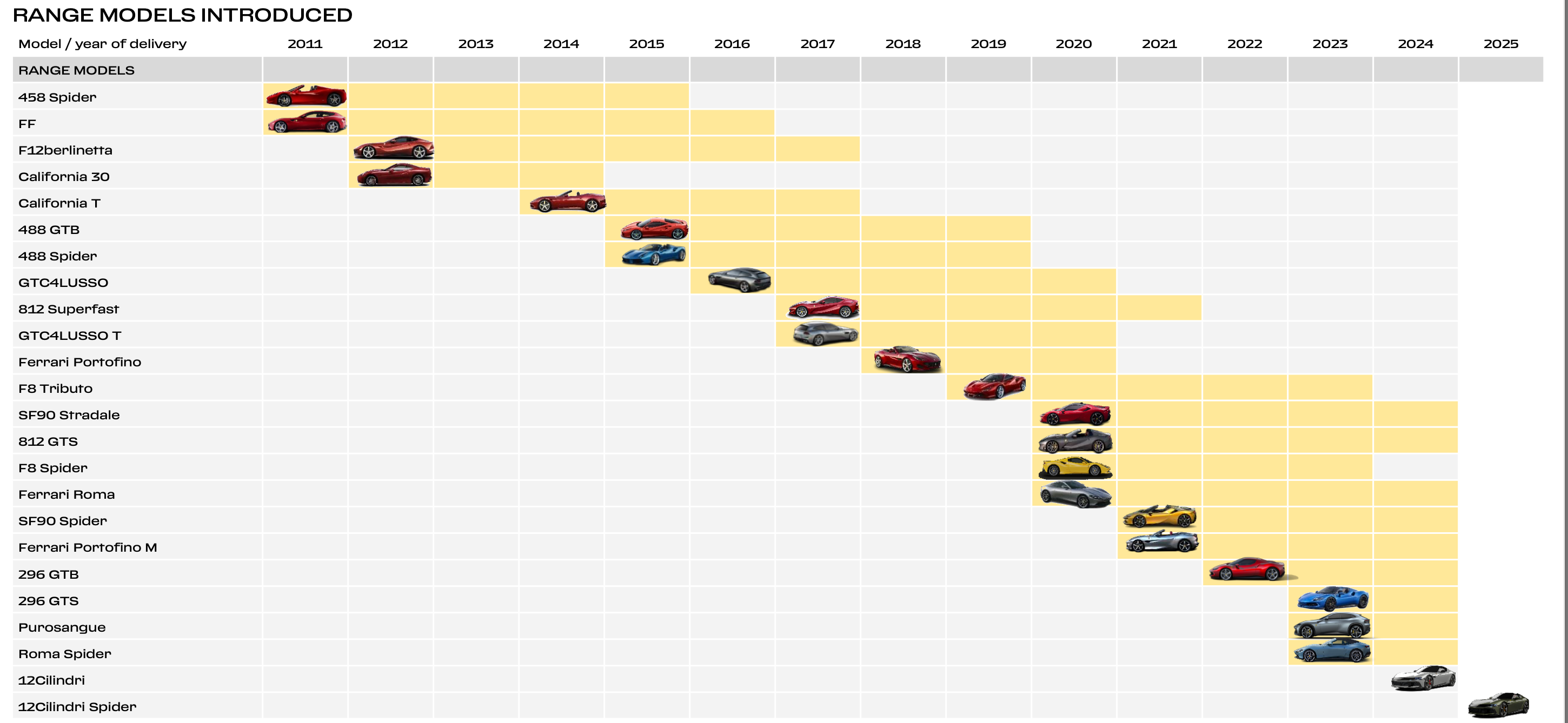
Range Models are categorized by their continuous production. They are designed for everyday use while maintaining Ferrari’s signature performance and luxury, making them accessible to a broader segment of Ferrari customers.
The following models are part of the Range Models, with an additional illustration at the bottom:
Roma (V8 ICE)
Roma Spider (V8 ICE)
812 GTS (V12 ICE)
Purosangue (V12 ICE)
296 GTB (V6 Hybrid)
296 GTS (V6 Hybrid)
SF90 Stradale (V8 Hybrid)
SF90 Spider (V8 Hybrid)
12Cilindir and 12Cilindri Spider will soon go into production
Special Series:
The Special Series models are limited in production or availability for a certain period and offer enhanced performance compared to the Range Models. The customer base is more exclusive, with a stronger focus on collectors.
812 Competizione
812 Competizione A
SF90 XX Stradale
SF90 XX Spider
Icona:
The production of Icona Series cars is extremely limited, often featuring heritage-inspired designs - iconic concepts reinterpreted in a modern way - with a strong focus on exclusivity. As a result, only ultra-wealthy customers with a history of purchasing Ferraris are eligible to buy these models.
Daytona SP3 (Only 599 units were produced, all of which were sold by invitation to previous owners for $2.25 million.)
Supercars:
Supercars serve as Ferrari’s flagship models and are released only on rare occasions, sometimes with many years between launches. The most recent example, the LaFerrari Aperta, was introduced in 2016 (only 210 units were produced). These cars showcase Ferrari’s most advanced technology and represent the pinnacle of its performance capabilities.
Needless to say, acquiring one is an extreme privilege.
F80 (Production planned for 2025.)
Track Cars:
Ferrari also produces cars exclusively designed for track racing, often derived from its Range and Special Series models.
296 Challenge
499P Modificata
One-Offs:
Ferrari caters to its most loyal and discerning clients by producing an extremely limited number of One-Off models. These unique cars are built on existing platforms for homologation purposes but are fully customized to match the exact design specifications of their owners, blending exclusivity with Ferrari’s legendary craftsmanship.
Below are the special series and limited edition models:
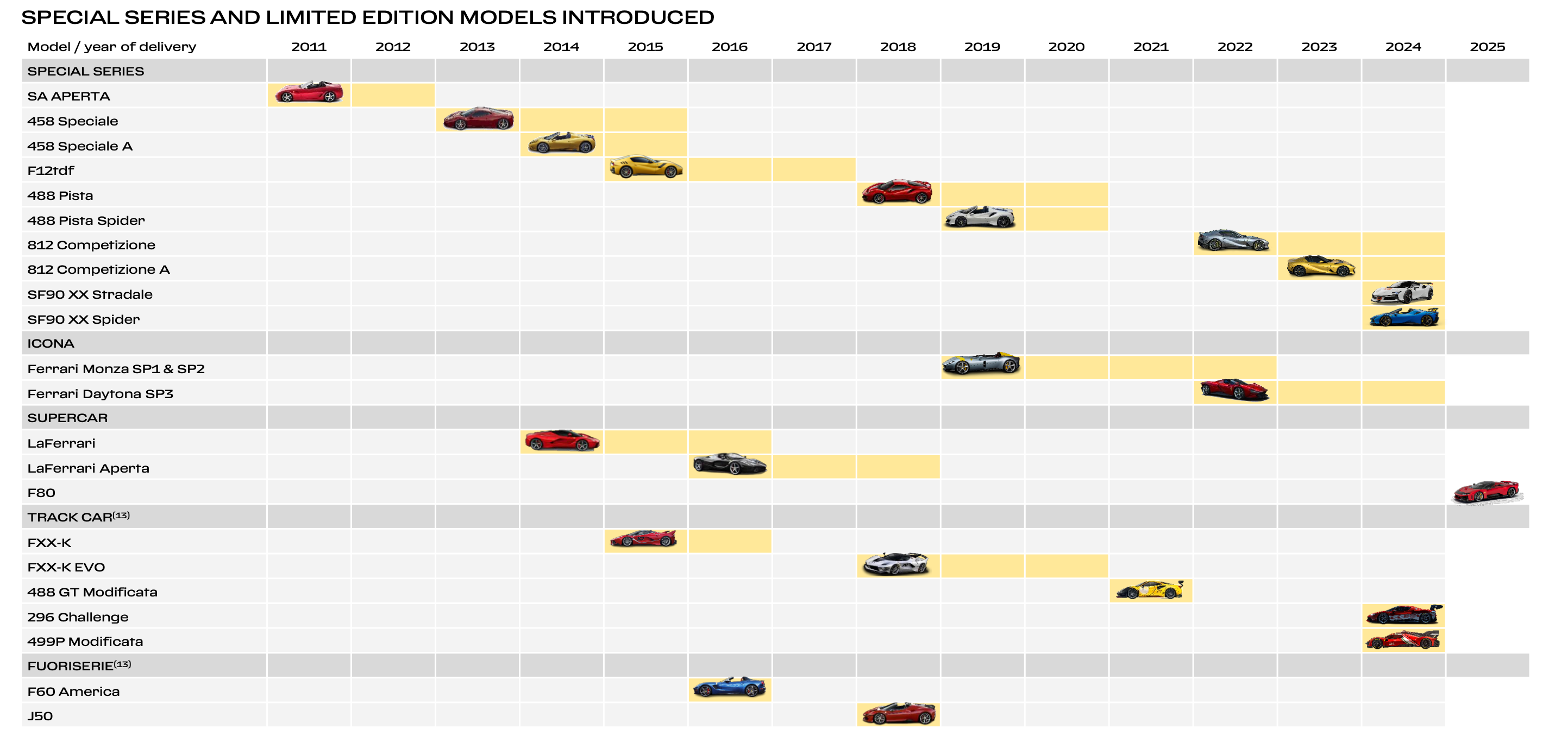
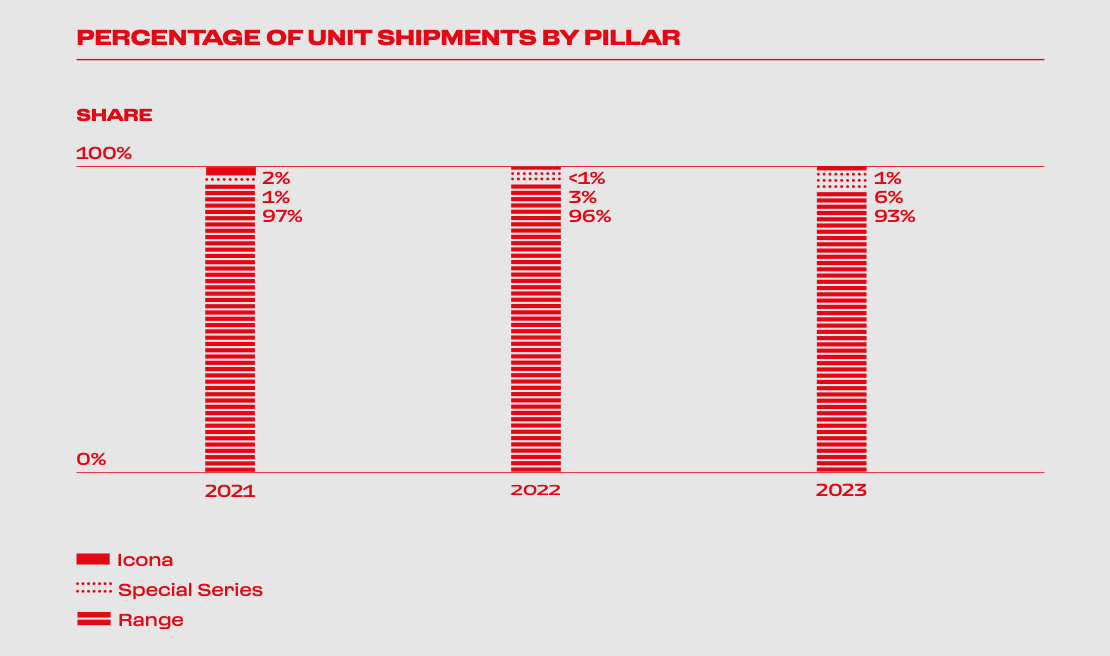
Ferrari’s product lineup consists of different categories, each serving a specific purpose. To put it into perspective, in 2023, more than 90% of units shipped fell into the Range Model pillar, but that number is declining!
Strategy
Ferrari’s strategy stands apart from most other car manufacturers. Their goal is not to sell as many cars as possible or maximize revenue at all costs. Instead, they focus on maintaining Ferrari as a privilege.
From personal experience, having visited Italy multiple times, it feels like Ferrari is deeply embedded in the country’s culture - everyone admires it, and everyone wants one. Reflecting this, I found that the Randstad Employer Brand Research named Ferrari as Italy’s preferred employer, highlighting that this admiration is mutual and that employees are well treated.
Ferrari’s strategy, briefly summed up:
• Low volumes and controlled growth
• Regular new model introductions and enhancements
• Pursue excellence in racing
• Controlled growth in adjacent luxury and lifestyle categories
CEO Benedetto Vigna
With the introduction of the new CEO Benedetto Vigna in September 2021, Ferrari entered its next phase. Carbon neutrality and the shift to EVs and hybrids became part of Ferrari’s strategy.
Vigna himself studied subnuclear physics and was the President of STMicroelectronics’ Analog, MEMS, and Sensors Group. Benedetto Vigna played a huge role in creating MEMS, which is the technology behind tiny sensors that combine mechanical and electronic components to detect motion, rotation, and pressure. These enable features like screen rotation in smartphones, motion control in gaming consoles, step tracking in wearables, and safety systems in cars (for example, the system behind airbag deployment). He built MEMS from scratch and landed his first customer after 10 years (Nintendo was their first big customer, followed soon by Toyota and Apple). Finally, the business reached one billion in revenue in 2021.
I like Benedetto’s style of leading a company. He tries to see the big picture and works closely with the people around him - For him, communication is key, as he strives to understand everyone's perspective to solve problems or improve efficiency.
I believe employees become more motivated and perform better when they work for a boss who values their contributions, which makes this an effective leadership approach. Good strategies for making a company valuable often come from employees who have worked in a certain field for several years. Benedetto relies on these insights, listens to ideas, and connects them with a scientific method to evaluate whether an idea is truly profitable.
Benedetto became the CEO in 2021, guiding Ferrari with the following principles: collaboration, continuous learning, confident humility, focus, a fearless organization, and the will to progress.
In his daily work, his responsibilities can be split into three categories:
Internal meetings (which can include test drivers or factory workers).
Private moments of reflection (important for decision-making).
Maintaining external connections (which can be particularly valuable, as internal problems can often be solved much faster through networking).
When he started, he changed the company’s structure to a flatter hierarchy. Also, when the hype around EVs began, Benedetto didn’t want the company to commit to just one direction. For him, it’s very important to give customers a choice - he made it clear that Ferrari will continue selling combustion engines, hybrids, and fully electric vehicles. This is also where Ferrari’s new E-Building comes into play, as they emphasize delivering exactly what the customer wants and presenting a perfect product.
I also like his approach to not over-prioritizing certain markets. When he arrived at Ferrari, he was given the task of pushing Ferrari’s presence in China, as it is a major market in the luxury sector. However, he felt this was not the right direction for the company to take. In an interview, he said:
“You can’t grow too much in China, because in every country, you must grow at the right pace… We are in China but we want to keep sales under 10% of the total because the market needs to mature ”
This is also a strong way to attract future customers in China and aligns well with Ferrari’s global strategy. (Ferrari has been selling its cars directly in China since the 1990s, whereas in comparison, sales to the U.S. and Italy date back to the 1950s—highlighting the significant difference in market maturity.)
Looking at it from this perspective: Ferrari has sold over 300,000 units in its history, yet only a few thousand (around 1,200) are sold in China annually. According to Benedetto Vigna, the total number of Ferraris ever sold in China is around 10,000, making ownership there a true rarity. If you're in China and want a Ferrari, you need to be lucky.
And that’s exactly why Ferrari is such a great business. You don’t need any complex metrics or financial models to determine whether Ferrari is a quality company or a quality stock - this fact alone proves how valuable the Ferrari brand is.
Benedetto has also pushed Ferrari to become more international. You could say that through his connections, he has expanded Ferrari’s global reach. Under his tenure, production has never stopped, and shortages have never been long-lasting. Thanks to his technological background, he continuously brings in new people and resources, sometimes making Ferrari feel like a tech company due to its strong focus on innovation.
Furthermore, he understands Ferrari’s significance beyond just being a car manufacturer - it’s a brand with millions of fans who follow it through social media, Formula 1, and new car releases. He recognizes the vast number of stakeholders involved, something he didn’t experience at STMicroelectronics. However, his approach is to adapt, embrace the challenge, and maintain a continuous learning process.
I believe his hiring was the perfect step for Ferrari, reinforcing a strong focus on innovation and technology while also driving the company toward electrification and carbon neutrality.
Ferrari’s Strategic Focus Under Vigna:
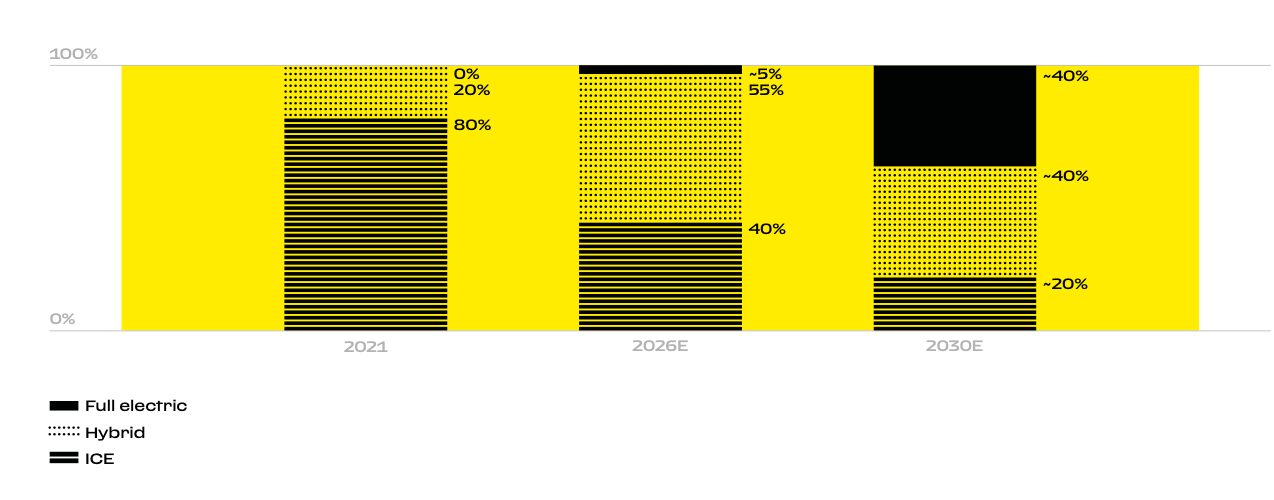
Electrification & Carbon Neutrality: Ferrari is advancing toward 60% hybrid and EV models by 2026 and full carbon neutrality by 2030.
Digital & Data-Driven Strategy: Strengthening Ferrari’s digital ecosystem, leveraging software-driven vehicle performance.
Exclusivity & Personalization: Emphasizing Ferrari’s core values of scarcity, luxury, and high-margin personalization services.
Financial & Leadership Influence:
Under Vigna’s leadership, Ferrari has consistently improved financial performance
Ferrari’s commitment to employee well-being and highly skilled workforce development has been a priority during his tenure.
Product Portfolio Strategy
Ferrari’s approach centers on its philosophy: “A different Ferrari for different Ferraristi, a different Ferrari for different moments.” By offering a diverse range of models, Ferrari ensures its cars fit seamlessly into various aspects of its clients lives.
Differentiated Product Line-Up
Ferrari’s lineup is designed to suit different moments and preferences:
Elegant sports cars for versatile use in daily life.
Models like the Roma or Portofino M fit into this category.High-performance vehicles for thrilling track experiences and challenging roads.
The SF90 Stradale and 812 Competizione are known for their extreme performance.
With a rich product mix, Ferrari offers the perfect car for every occasion. Since they control their production volume, they directly benefit from this strategy.
Clients
For Ferrari, clients are at the core of the business. Unlike many other luxury brands, Ferrari does not rely on traditional advertising. Instead, its efforts to connect with the broader public revolve around creating an emotional resonance with the brand. This is achieved primarily through Ferrari’s presence in motorsport, especially Formula 1.
Beyond racing, Ferrari extends its reach through lifestyle activities, including the sale of luxury goods, branded experiences in parks and museums, and collectible items (these sectors have received strong feedback, with record attendance). Ferrari also leverages modern digital platforms like eSports and social media to build awareness and excitement among a global audience.
For both existing and potential clients, Ferrari takes a personalized approach, focusing on long-term relationships rather than single transactions. The company actively encourages clients to enjoy their cars both on the road and on the track. In 2023, 74% of Ferrari’s new car sales were made to existing owners. Additionally, Ferrari has strategically rejuvenated and expanded its client base. Over the past year, the company saw a 10% increase in active clients, with 40% of new customers under the age of 40. At the same time, Ferrari has nurtured its top collectors, who have increased their average ownership by 10%.
Ferrari emphasizes creating a sense of community among its clients through various initiatives. These include digital tools such as the MyFerrari App, which provides exclusive content and enhances the customer experience during the purchase process. Events like Esperienza Ferrari allow clients to explore Ferrari’s heritage and test new models. Track-focused programs, such as Corso Pilota, cater to different levels of driving expertise, while on-road events, like the Ferrari Cavalcade and Tribute to Mille Miglia, offer curated driving experiences.
To ensure consistent quality, Ferrari closely monitors metrics such as the Customer Satisfaction Index (CSI) and the Ferrari Relationship Index (FRI).
The Downsides of Ferrari’s Strategy
What I don’t like about this approach is that for wealthy individuals who only want Ferrari’s most exclusive models, the process can be a frustrating. First, you have to go through the dealership process, which we’ll discuss in detail later. But beyond that, even if you have the money and willingness to buy Ferrari’s top-tier models, you can’t simply walk in and buy one.
If we’re talking about the best of the best, Ferrari requires customers to work their way up the ladder, often purchasing multiple lower-tier models before being granted access to the most exclusive ones. You don’t just walk in and say, "I want the F80," - even if you’re the most eager buyer in the world.
A great example is Jay Leno (net worth ~$450 million), who has openly shared why he doesn’t own Ferraris, despite liking the cars. He has mentioned the dealership experience and the fact that he would have to buy other Ferraris first to gain access to the models he actually wants - something he considers a no-go. For him, the customer service experience is lacking, and that’s an area where Ferrari could improve.
After-Sales Activity
Ferrari’s after-sales strategy focuses on preserving the market value of its cars, which often exceeds that of other brands. This enhances resale value, lowers costs when transitioning to new models, and boosts customer loyalty. A key part of this strategy is Ferrari’s free 7-year maintenance program on all new cars (often extended beyond that). By supporting repeat purchases, Ferrari strengthens its relationship with clients and ensures long-term satisfaction.
Ferrari takes this very seriously, training its dealers rigorously and even deploying "flying doctors" - specialized technicians who travel to various service centers to assist customers with any issues. I love this approach because it reflects a true long-term vision. While Ferrari must invest heavily in this strategy now, it ultimately enhances brand value, which is a brilliant move.
However, this process can be challenging at times, as new models can complicate value preservation. A great example is the Purosangue, a model with extreme high demand. Unlike traditional Ferrari sports cars, it is often used as a daily driver rather than a luxury car, leading to significantly higher mileage than usual for a Ferrari.
Additionally, there is a double-edged sword when it comes to personalization. On one hand, customization significantly boosts revenue and margins. On the other hand, highly personalized cars are harder to resell, which can negatively impact their long-term value
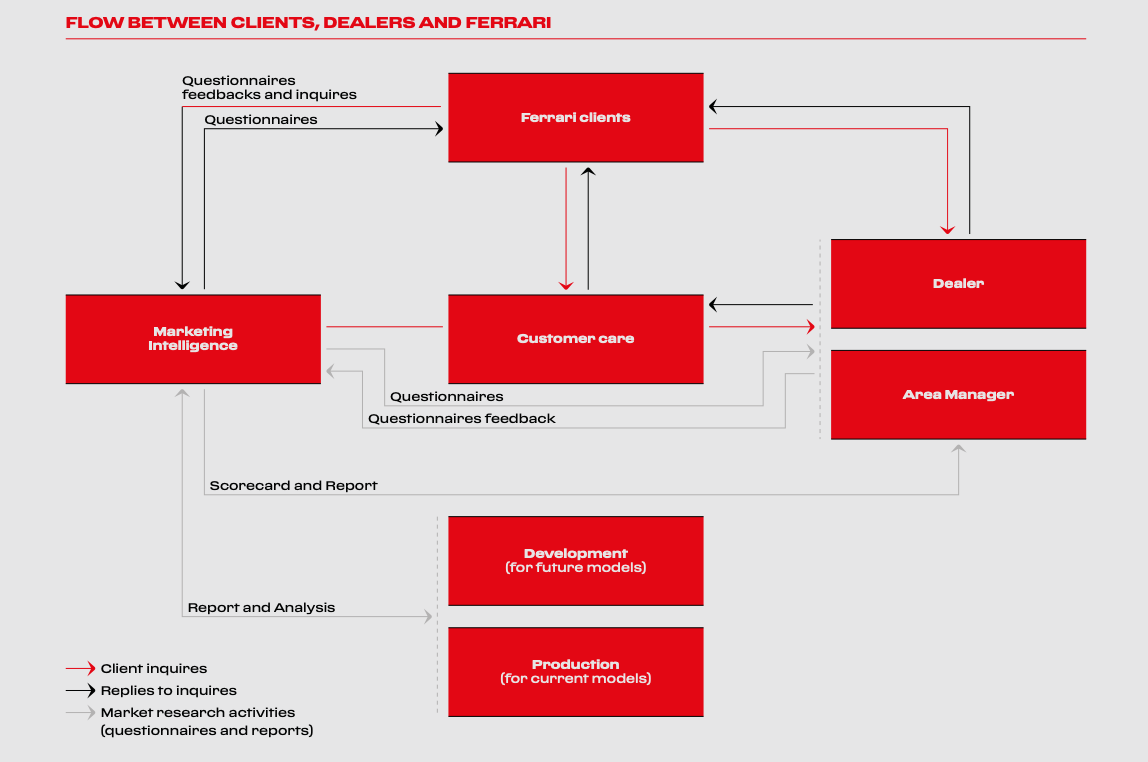
This flowchart illustrates the interaction between Ferrari clients, dealers, customer care, and internal departments such as Marketing Intelligence, Development, and Production. Here’s a quick explanation:
Client Interaction: Clients provide inquiries, feedback, and complete questionnaires through customer care or directly to dealers.
Customer Care: Handles client inquiries and feedback, relays information to dealers and area managers, and shares client data with Marketing Intelligence.
Dealers and Area Managers: Address client needs and share insights back with customer care.
Marketing Intelligence: Analyzes client feedback, compiles reports, and communicates insights to Development (future models) and Production (current models).
Development and Production: Use insights from Marketing Intelligence to improve current models and design future vehicles.
Now that we understand what Ferrari aims to create and how it positions itself as a brand, we can use this knowledge to analyze how its design philosophy aligns with that vision
Design
As we already discussed, design is a fundamental element in Ferrari’s process. Ferrari aims to create modern yet timeless designs while maintaining high-performance standards. An essential aspect of developing a new model is that every car stands out from the others. To further refine this process, Ferrari established its own Design Centre. A great example of this success is the Purosangue, which won the Car Design Award in 2023.
Now, let’s take a look at Ferrari’s design process:
1. Initial Concept and Sketching
The journey begins with the design team, led by Flavio Manzoni, brainstorming and sketching ideas on blank sheets of paper. These initial sketches capture the essence and vision of the new model.
2. Digital Modeling
The sketches are transformed into detailed 3D digital models. This phase allows designers to explore proportions, surfaces, and aerodynamics in a virtual environment, facilitating iterative refinements.
3. Clay Modeling
Despite advancements in digital technology, Ferrari places significant emphasis on handcrafted clay models. Artisans sculpt full-scale clay representations of the car, enabling the team to assess the design’s physical form and make tactile adjustments.
4. Digitalization of Clay Models
Once the clay model achieves the desired form, it is scanned to create a precise digital replica. This digital model serves as a reference for further refinements and engineering integration.
5. Engineering Collaboration
Designers collaborate closely with engineers to ensure that aesthetic elements align with performance, safety, and manufacturing requirements. This ensures that the final design is both beautiful and functional.
6. Prototype Development
Functional prototypes are built based on the finalized design. These prototypes undergo rigorous testing to evaluate performance, aerodynamics, and durability.
7. Final Adjustments and Production
Feedback from prototype testing informs any necessary design tweaks. Once all aspects meet Ferrari’s stringent standards, the design is approved for production, leading to the creation of a new Ferrari model.
Dealership
The Ferrari dealership experience is carefully structured to reinforce the brand’s exclusivity while ensuring strong customer engagement. The buying process, dealership operations, and delivery procedures follow specific guidelines set by Ferrari.
The idea that purchasing a used Ferrari is a requirement before buying a new one is largely incorrect. Ferrari does not mass-produce cars for dealership stock; instead, each vehicle is built to order based on customer specifications. If immediate availability is a priority, a used model from the dealership may be the only option, which may have contributed to this belief. However, for ultra-limited models such as the Icona and Special Series, prior Ferrari ownership and a strong relationship with the brand are required.
Ferrari also sets boundaries for customer specifications. While personalization is a key aspect, not every request is allowed - although the exact rules are not publicly disclosed.
Ferrari’s Dealership Network
Ferrari carefully selects its dealerships based on strict criteria, including financial stability, brand integrity, and customer experience standards. The company operates 196 points of sale worldwide but does not own any dealerships itself. Each dealership must adhere to Ferrari’s uniform design, branding, and service quality guidelines. In recent years, Ferrari has been upgrading dealer facilities to align with the luxury experience expected from the brand.
Made-to-Order & Delivery Process
Ferrari builds cars exclusively to order, meaning new vehicles are not available as showroom stock. Delivery timelines depend on several factors, including customization complexity, customer status, and factory scheduling. These timelines can vary significantly, and the waiting period can be very long—often over a year.
Industry Overview
The car industry in general is, let’s call it challenging, for investors and car manufacturers to make sustainable profits. The global car industry is currently navigating a period of immense disruption and uncertainty. Traditional automakers, especially in the West, are facing mounting challenges from economic pressures, the shift to electric vehicles (EVs), and intense competition from Chinese manufacturers.
Western Automakers Under Pressure
Nissan, for example, is cutting 9,000 jobs following significant drops in profits and production. Analysts suggest the company could be at risk of collapse within 12 to 14 months, with speculation about a potential acquisition by Honda. Volkswagen is similarly in turmoil, struggling financially, while its CEO recently resigned. The company’s stock is trading at a historically low valuation.
Other major players are also struggling. Mercedes-Benz has issued profit warnings, while Porsche and BMW have reported declining sales, particularly in China—a key market for growth. Ford has announced layoffs across Europe. Many Western automakers’ stock prices have plummeted to decade lows, highlighting the scale of the industry’s crisis.
EV Transition Challenges
The transition to EVs is a major source of difficulty for Western manufacturers. While countries like China and Norway are excelling in their EV adoption, most of Europe and the US are lagging. Key challenges include high EV production costs, insufficient charging infrastructure, and lower demand due to the premium prices of EVscompared to traditional internal combustion engine (ICE) vehicles.
Chinese manufacturers, including BYD, Xiaomi, and Xpeng, are thriving by focusing on affordable EVs and hybrids. Their growing dominance puts further pressure on Western automakers, even as the EU and USA impose tariffs on Chinese cars. Despite these measures, Western companies continue to struggle with producing affordable, high-quality EVs.
Many automakers have responded by delaying their EV plans, recognizing that price is the decisive factor for most consumers. Meanwhile, an increasing number of buyers are choosing to hold onto their existing vehicles longer instead of purchasing new ones, further dampening demand.
Resilience of Chinese Manufacturers
Chinese automakers are capitalizing on the situation, with their EVs gaining popularity both domestically and globally. The success of these companies highlights a broader shift in the industry: while Western manufacturers face declining profitability and layoffs, Chinese brands are positioning themselves as leaders in the EV market.
Ferrari: One of a Few Exceptions to the Rule
Luxury carmaker Ferrari stands out as an exception. Its reliance on the Chinese market is minimal, with only 10% of its sales coming from the region. Even if demand in mainland China slows (which it is—but not in Taiwan), Ferrari’s strong global demand and high pricing power shield it from the broader challenges facing the industry. Unlike mainstream automakers, Ferrari’s business model allows it to thrive despite economic uncertainties and shifts in consumer preferences.
This is due to the fact that Ferrari operates in the Luxury Performance Car Industry. By definition, any two-door or two-seat car with an engine of over 500 horsepower and a retail price above €180,000 fits into this category (later, we will discuss the main competitors). This market has fewer competitors than the broader car industry.
The expected growth for the Luxury Performance Car Industry can’t be predicted exactly, however, Statista predicts the following
protected to reach US$27,760m in revenues in 2025
the luxury cars market to grow at a CAGR of 18.17% from 2025 to 2029.
car unit sales to reach 386.2k in 2029
most revenue is expected to be generated in the US
Recently, with the introduction of its first four-door model, Ferrari entered the Enlarged Luxury Performance Car Market. This market now includes SUVs, such as Ferrari’s Purosangue, Lamborghini’s Urus, and Aston Martin’s DBX.
By expanding into this segment, Ferrari has broadened its market reach, stepping into an area where it previously had no presence.
Below, we can see Ferrari’s market share (The enlarged market also includes the traditional Luxury Performance Car Market)
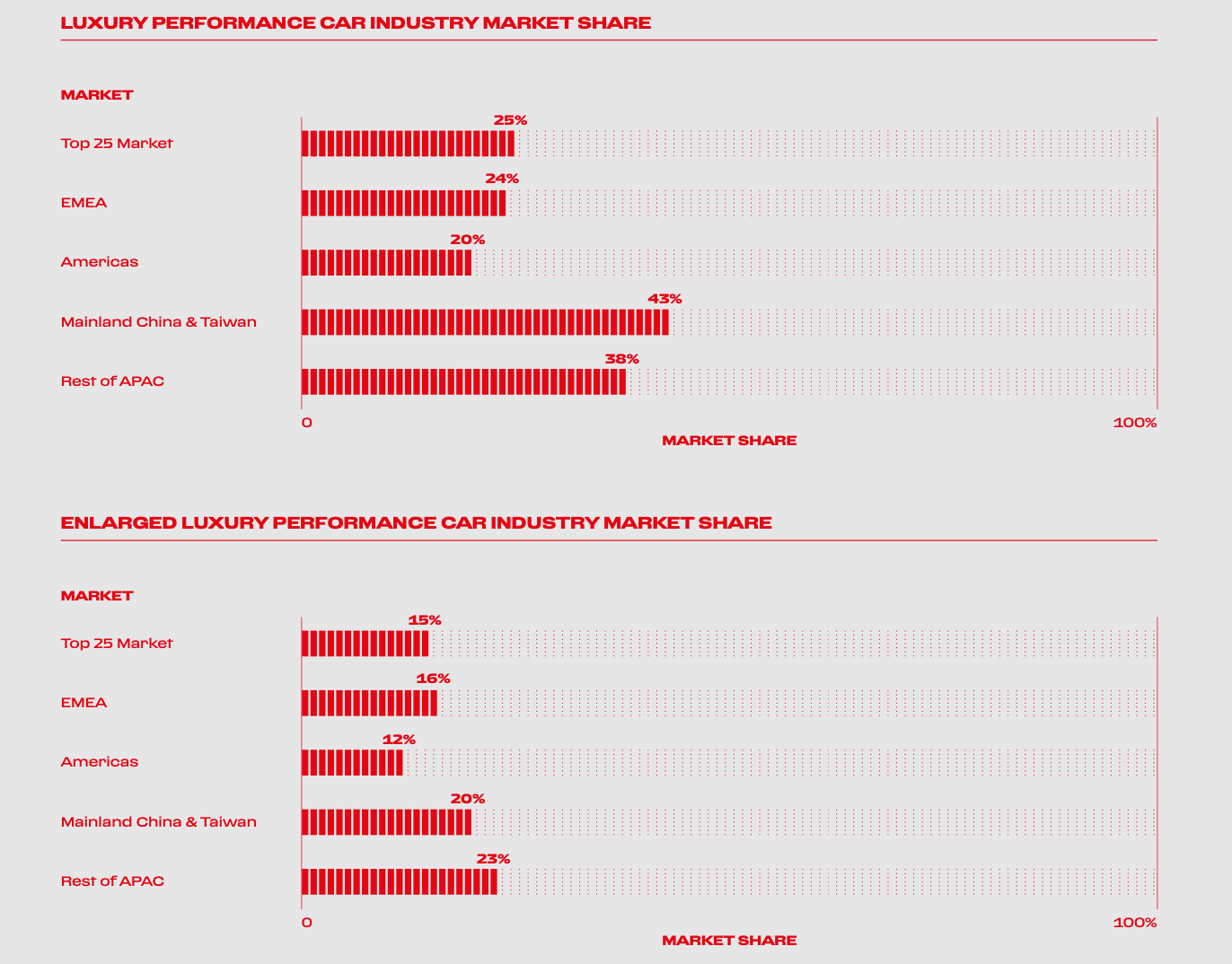
Ferrari holds a market share of 25% and 15%, though this may decline in the near future as Ferrari intentionally limits its production volume and does not aim to increase shipped units.
Ferraris shift to EVs
By 2026, Ferrari aims for its lineup to consist of 60% hybrid and fully electric vehicles, with the remaining 40% powered by internal combustion engines (ICE). Looking ahead to 2030, Ferrari's goal is to have 40% of its offerings as fully electric vehicles, 40% as hybrids, and 20% as ICE vehicles.
This shift is a major milestone for Ferrari, but it’s not guaranteed that EV and hybrid models will be as popular as their iconic ICE models, which have been loved for decades. However, as of Q1 2024, Ferrari's product portfolio included nine ICE models and four hybrid models, accounting for 54% and 46% of total shipments, respectively.
With demand showing no signs of weakening, we can reasonably expect that Ferrari will continue to be successful with EVs and hybrids in the future.
Challenges & Strategic Adjustments
One of Ferrari’s biggest challenges is balancing customer demand with controlled production levels. While the company has seen strong hybrid adoption, the shift toward full electrification introduces execution risks. Ferrari plans to launch its first fully electric vehicle in 2025, but its core customer base has historically valued engine sound, mechanical feel, and emotional connection - elements that are difficult to replicate in EVs.
There were also supply chain constraints in early 2024, affecting certain specialty materials used in high-end customization options. However, Ferrari reallocated production resources to prioritize higher-margin models, ensuring that revenue continued growing despite flat shipment numbers.
CEO Benedetto Vigna addressed Ferrari’s selective growth approach:
“We are not chasing volume. Our strategy remains focused on exclusivity, with growing demand for our hybrid lineup reinforcing our long-term vision.”
The key question is whether Ferrari can sustain high ASPs and pricing power as it transitions into EVs. The brand’s exclusivity has always been tied to its mechanical engineering and combustion-powered performance, and any misalignment with customer expectations could pose a risk.
The critical inflection point will be in 2025, when Ferrari’s first EV hits the market. If customer adoption is strong, Ferrari’s ASP growth trajectory could continue. If not, the company may need to adjust its product positioning.
We still don’t know how Ferrari’s customer base will react to its EVs or whether they will continue to attract demand through 2026 and beyond. (There are rumors that the car will be priced at $500,000.)
I don’t doubt that Ferrari’s fully electric vehicle will be a technological masterpiece, and demand will likely be strong at launch. However, the longer-term success remains uncertain.
Competitors
Competition in the Luxury Performance Car Market is limited to a small number of players. There are luxury brands from large automotive corporations as well as smaller manufacturers exclusively focused on high-end performance vehicles.
The following companies represent Ferrari’s main competitors:
Lamborghini
McLaren
Aston Martin
Rolls-Royce
Bentley
Porsche
Mercedes
Audi
BMW
Land Rover
Ferrari vs. Competition
When it comes to luxury performance cars, the competition is fierce but limited to a handful of key players. Let’s compare Ferrari with what I consider its most relevant competitors: Lamborghini, McLaren, and Aston Martin.
Units Sold & Operating Profit (January – September 2024)
Ferrari: 3,383 units sold, €467 million operating profit (28.4% return on sales)
Lamborghini: 8,411 units sold, €678 million operating profit (27.9% return on sales)
Aston Martin: 3,639 units sold, €152.7 million operating loss
McLaren: 2,429 units sold, €80.8 million operating loss
Key Insights:
Ferrari dominates in profitability, maintaining a 28.4% return on sales, the highest among its competitors.
Lamborghini sells more cars, but Ferrari remains more profitable due to higher margins and pricing power.
Aston Martin and McLaren are operating at a loss, proving that high sales volumes alone do not guarantee financial success.
The Importance of a Strong Product Mix
In the luxury performance market, constantly introducing new models is crucial. Ferrari has recently benefited greatly from its rich product mix.
Some competitors rely on fewer models, limiting their appeal. For example, Lamborghini currently only sells three models:
Urus (SUV)
Revuelto (Flagship Supercar)
Temerario (New Addition)
Meanwhile, Ferrari continues to innovate, regularly expanding its lineup with a mix of hybrids, ICEs, and soon EVs. Looking ahead, Ferrari shows no signs of slowing down, ensuring that its market position remains strong through continuous model diversification.
Financials:
Ferrari’s key metrics are highlighted below:
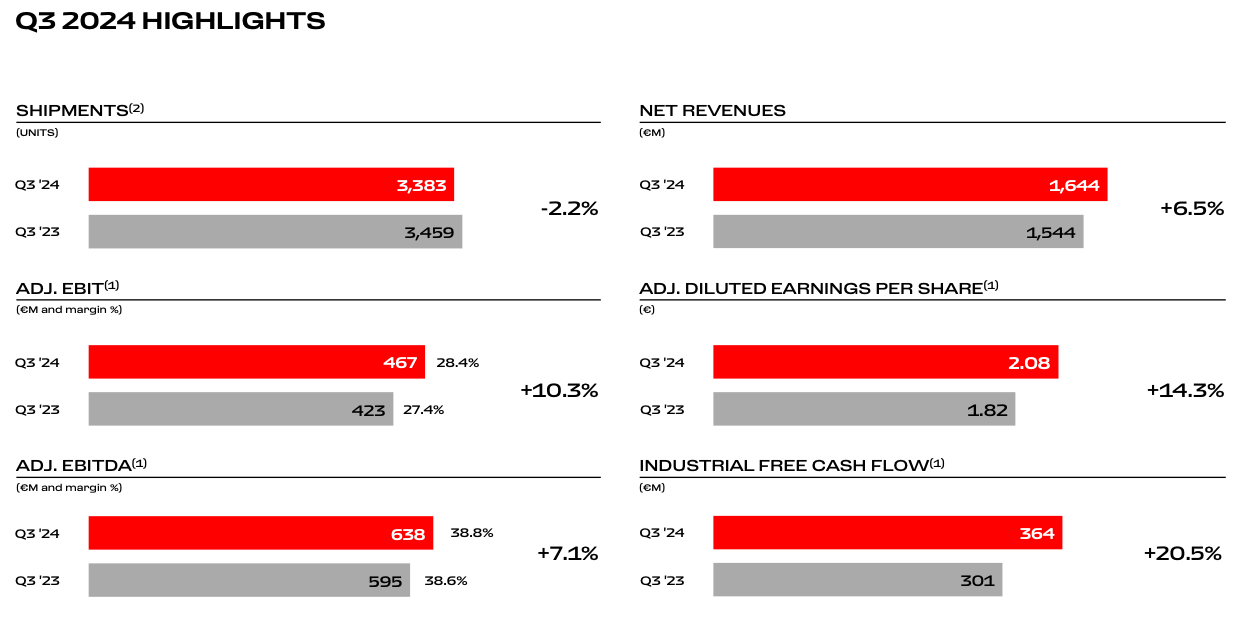
The company reported €4.94 billion in net revenue for the first nine months of 2024, up 11% YoY, with its core Cars & Spare Parts division making up over 85% of total revenue (as previously mentioned).
However, the real story behind Ferrari’s revenue growth is the increasing average selling price (ASP). In 2024, ASP reached €474,000 per vehicle, an 8.6% increase YoY. This is not only due to price hikes but also Ferrari’s ability to upsell premium customization options.
Unlike mass-market automakers that rely on unit growth to drive revenue, Ferrari’s revenue model depends on:
Limited production caps, ensuring every Ferrari retains its long-term value.
Personalization programs, where customers spend significantly above base model pricing.
Higher-margin hybrid models, which have become increasingly dominant in the product mix.
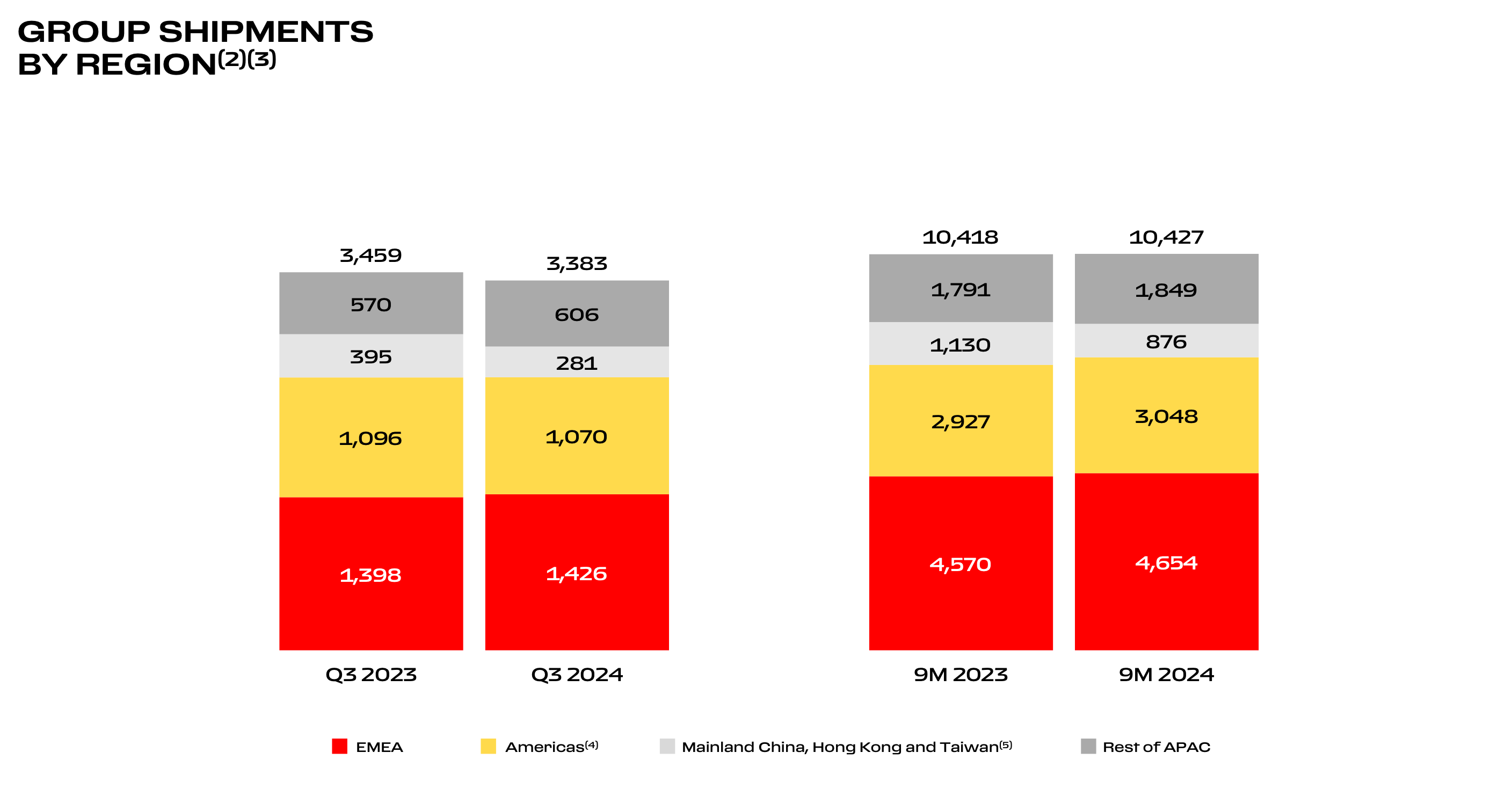
Despite revenue growth, total unit shipments remained nearly flat at 10,427 units in the first nine months of 2024.
Profitability
Ferrari’s profitability remains high, with EBIT margins at 28.7% - one of the highest among automakers. Net profit reached €1.14 billion, growing 16% YoY, reinforcing Ferrari’s ability to increase earnings without raising unit shipments.
This financial strength is largely due to Ferrari’s strict cost discipline and its ability to charge a premium, even as input costs fluctuate. Personalization plays a key role in margin expansion, allowing Ferrari to capture additional revenue without significantly increasing production costs.
The company’s Ferrari’s Shipment Breakdown:
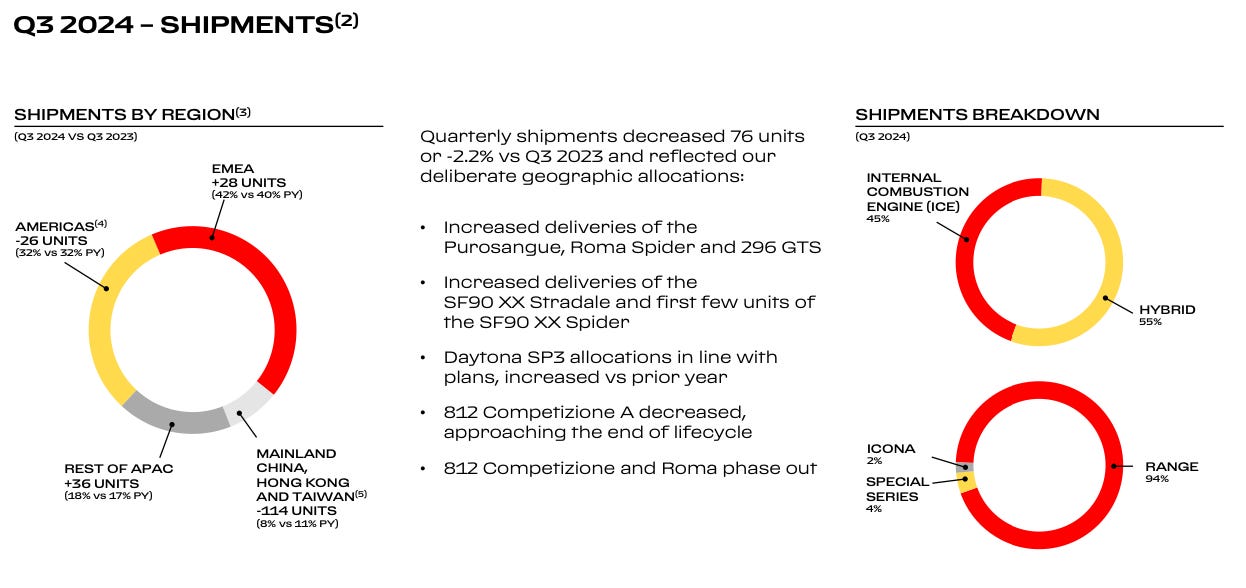
EMEA (Europe, Middle East, Africa) making up 42% of shipments.
The Americas contributing 32%.
China & APAC accounting for 26%, though shipments to China declined from 342 to 190 units YoY.
This geographic split means Ferrari isn’t over-reliant on any single market, reducing macroeconomic risks. A lot of luxury brands are reliant on the market in China (LVMH), Ferrari not.
The graphic below provides a clearer illustration. Volumes remain nearly flat but are well-diversified across regions and models:
Stock Performance & Valuation
Ferrari ($RACE) currently trades at $429.65 on the New York Stock Exchange (NYSE) at the time of writing. Unlike traditional automakers, Ferrari is valued more like a luxury brand, with a P/E ratio of 47x, significantly higher than mass-market car manufacturers such as General Motors (GM) and Ford (F), which trade between 4-6x earnings. Notably, only Tesla trades higher with a P/E of 128.
The company’s strategy of low production, high pricing power, and long waitlists keeps demand strong and margins high. Ferrari’s customers are far less price-sensitive than buyers of mainstream brands. While most automakers need to adjust pricing or offer incentives in weaker macro environments, Ferrari’s waiting list extends into late 2025, supporting stable revenue projections.
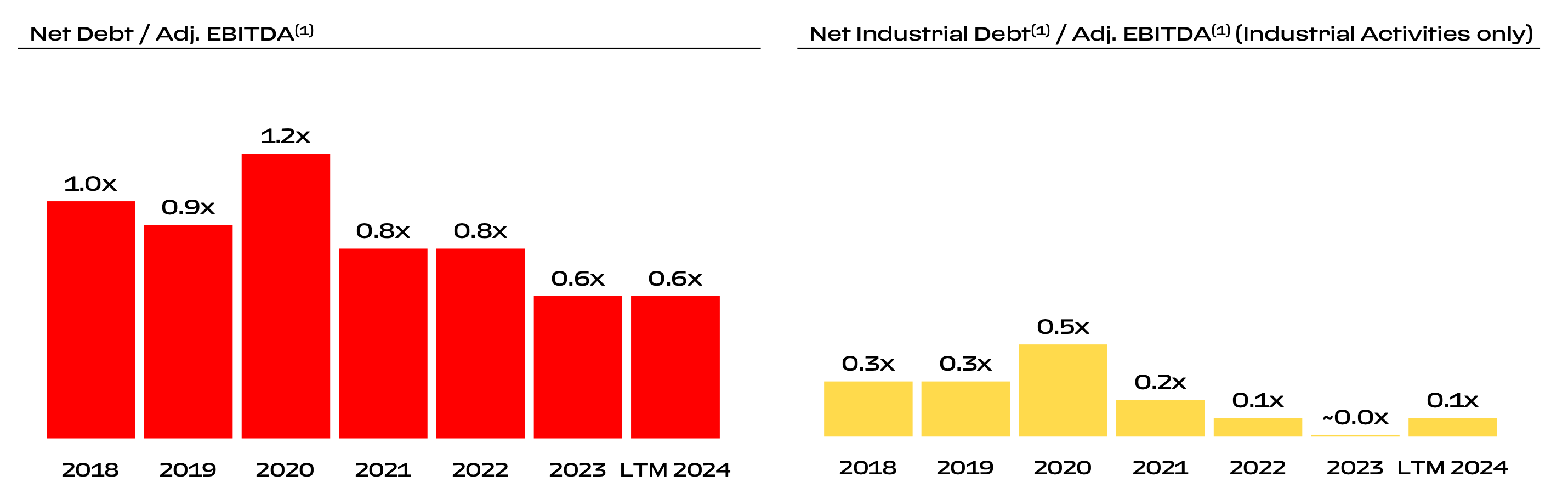
Below, you can see Ferrari’s debt ratios. The company holds nearly €1.5 billion in cash, while its Industrial Free Cash Flow (FCF) reached €364M in Q3 2024, up €63M YoY. Additionally, Net Industrial Debt decreased from €441M to €246M, so Ferrari’s financial position is healthy. Unlike many companies, Ferrari does not dilute shareholders - instead, it actively buys back shares.
Ferrari is by no means a cheap company. It trades at a P/S ratio of 10.5, which is very high considering its projected high single-digit revenue growth. I don’t see a strong case for Ferrari trading at significantly higher multiples, but I also don’t expect it to drop to a more reasonable valuation. If you want to own Ferrari, you’ll likely have to buy it at a price that seems expensive.
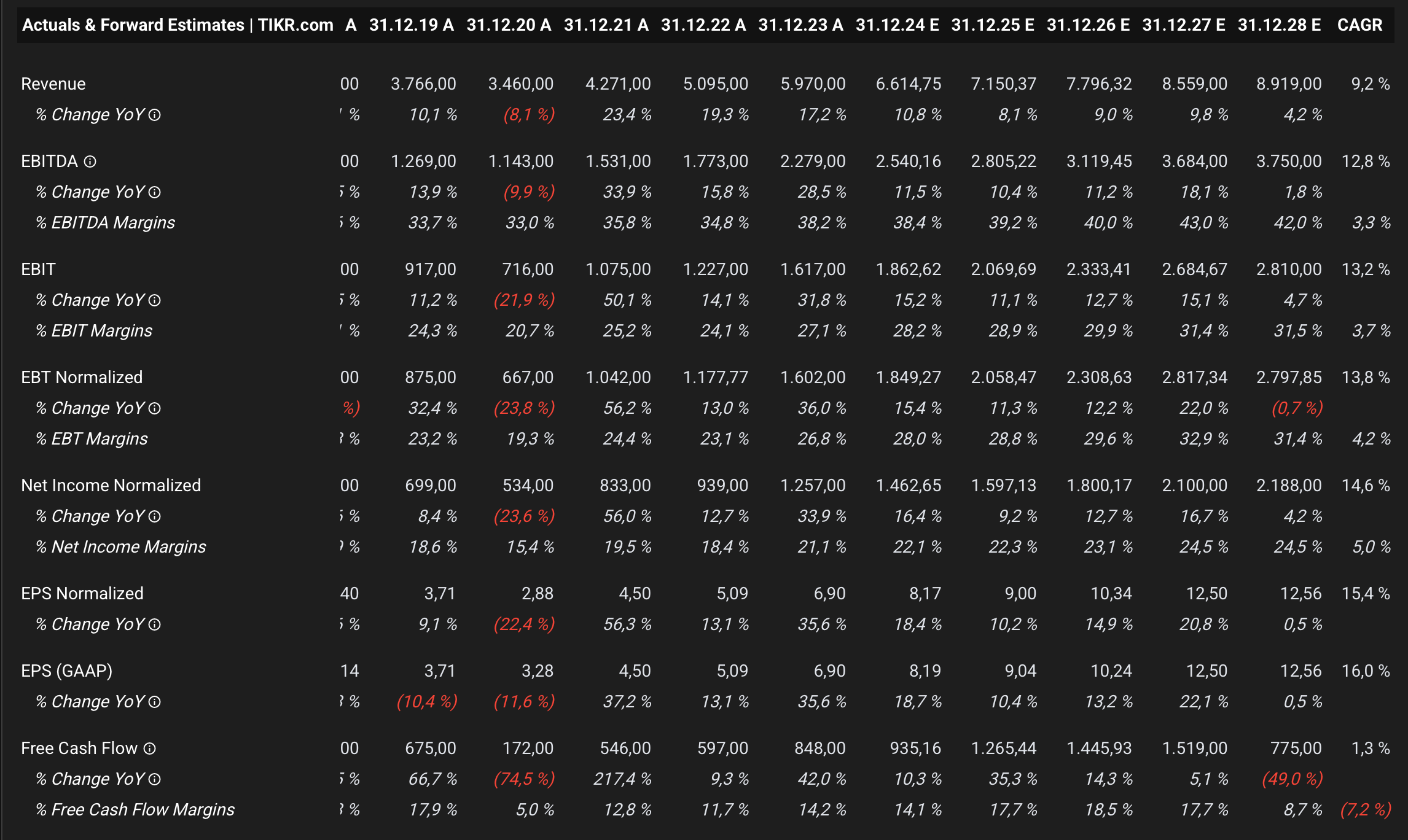
If Ferrari maintains a P/S ratio of 10.5, the upside would be roughly 30% until 2028. Additionally, if we assume Ferrari trades at a 38x forward earnings multiple and achieves its target EPS of €12.56, the stock would be valued at around €460—leaving almost no upside.
Overall, Ferrari is a great company, and I would love to own it, but the valuation is simply too high for me. I fall into my own theory that it will never reach a reasonable price for me.
If you enjoy research like this, don’t forget to like and subscribe! Also, sharing this post on social media or with colleagues - along with a positive comment, helps the publication grow. Every share is greatly appreciated!